
Nearly all former youth football players in a new study reported experiencing abuse. The Center for Violence Prevention Research is working to understand why, and to give coaches the tools to protect the young athletes in their care.
8 min read
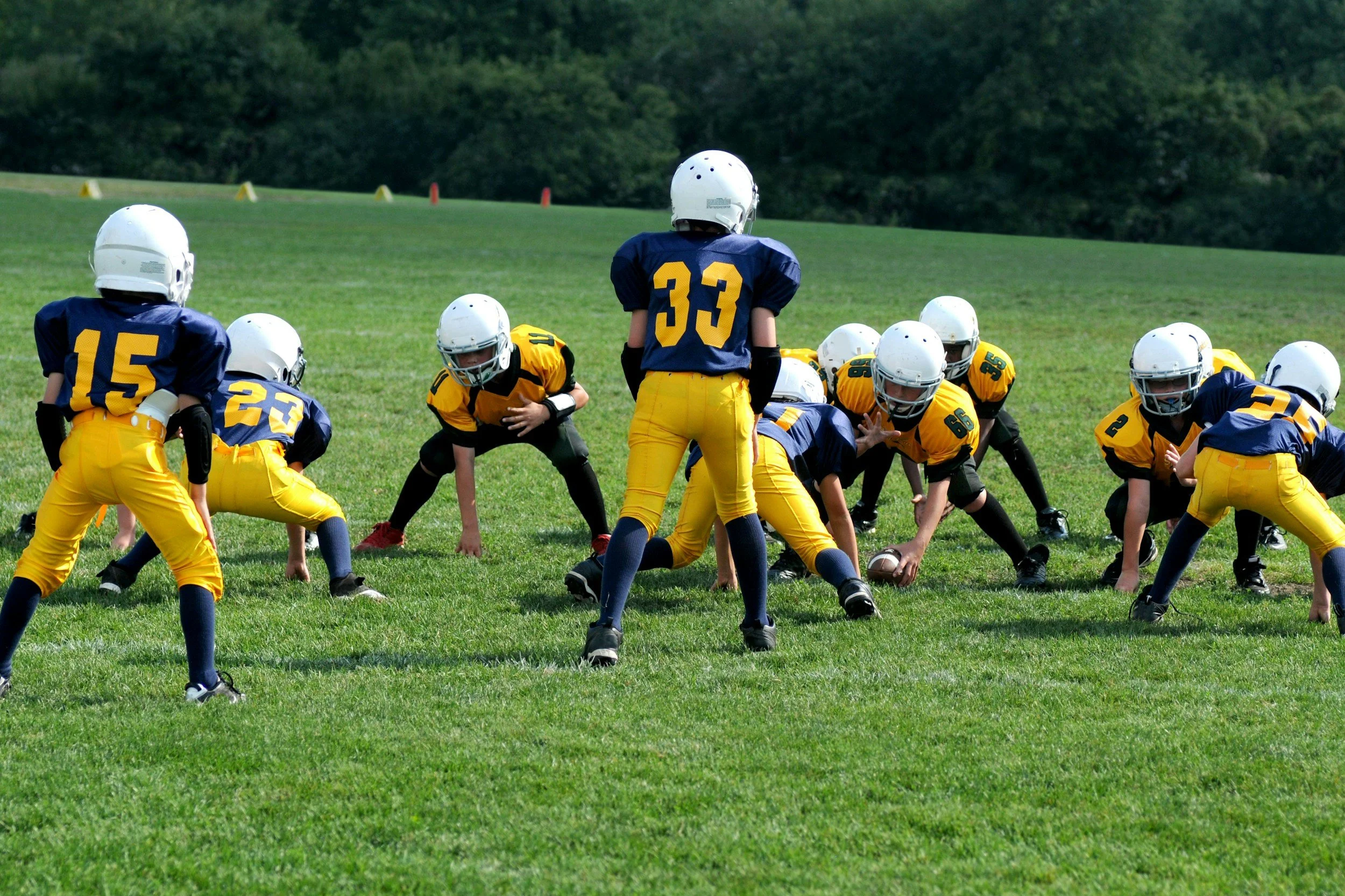
Football was everything to Michael. He grew up in Minnesota, in a suburb eight miles north of the Twin Cities, and began playing when he was eight. He felt at home on the field, and tried his hand at several positions: running back, safety, both punt and kick returner. Football was also the official family sport. An uncle did a brief stint with the Atlanta Falcons, and Michael’s interest was heavily encouraged by his father, who was determined that his son share his love of football. He succeeded: Michael adored it.
Michael played on the same team from third grade through eighth. The tight-knit crew was coached by the dads of his teammates, and the ethos verged on the philosophical. Team over self. Michael learned the importance of relying on and being there for others, and he credits the camaraderie this fostered for their impressive winning streak. Over its six-year tenure, the team won 61 of the 62 games it played, and the remaining game was a tie.
Things changed dramatically when Michael entered high school. He skipped his district school and open-enrolled at another one nearby, chosen so he could play alongside a quarterback who would go on to become one of the best in University of Minnesota history. When he speaks about this period of his life, Michael’s face takes on a solemn, inscrutable look. Parental pressure aside, all he had known about football up until this point was positive: the sportsmanship, the untarnished victories, the fun of it all. He’d left his former teammates and arrived at his new school knowing no one.
Though he was only a freshman, the coach moved him up to varsity, and this is when the trouble began. “On the football field, obviously being a freshman, you’re going to take heat,” said Michael. “That’s not what we’re talking about here. We’re not talking about jealousy and envy.”
“ On the football field, obviously being a freshman, you’re going to take heat, That’s not what we’re talking about here. We’re not talking about jealousy and envy.”
In an interview conducted by the Center, Michael spoke openly about the physical abuse he endured at the hands of his teammates. During play he was subjected to late hits and blindsides. In the scrum of a pile-up, other players would squeeze, poke, and pinch him, in what he said were deliberate attempts to inflict injury. It was so different from his previous experience of football, so disorienting—and it was only the beginning.
There were about 2,000 students at the school, roughly 97% white, and Michael, who is Black, was one of only three or four non-white players on a football team of 60. He suspected that the aggression was racially motivated; he couldn’t think of any other reason why he was being singled out. His suspicions were confirmed when other players on the team began calling him the N-word. This was the early 2000s, half a century after the Supreme Court ruled school segregation unconstitutional, yet blatant racism was still tacitly tolerated and inadequately handled. Michael reported it to the coach, who dealt with it by pulling the main antagonists aside and having a quiet word with them, which only further isolated Michael from his teammates. “All of a sudden you’ve got all other players saying, ‘This whole team environment has changed now,’” said Michael. “‘The coach wasn’t like this last year.’”
There were other behaviors that Michael witnessed that didn’t impact him quite as directly. In the locker room, some of the other boys would whip each other’s naked bodies with towels and slap each other’s penises. While it wasn’t condoned behavior, it often went on in full view of the coach’s office, which was located directly in front of the showers, and nothing was ever said or done to stop it. The sexualized behavior made Michael uncomfortable and he stopped showering at school. Between that and the racial slurs, he began avoiding the locker room as much as he could. He would attend practice and then head straight home. Looking back, Michael describes those years as “the best football years and the worst personal years of my existence.”
Experiences like Michael's are far more common than many of us would guess. When we think of abuse in youth sports, some high-profile cases come to mind: Penn State assistant football coach Jerry Sandusky, who, in 2012, was found guilty of 45 charges related to the abuse of young boys. Or Larry Nassar, the former USA Gymnastics doctor who was effectively sentenced to life in prison in 2018 for assaulting at least 265 young women and girls. Then there is the case of Ohio State University physician Richard Strauss, who, according to a 2019 investigation, sexually abused at least 177 young men over two decades but never faced criminal charges. Those cases made headlines. But they tell us very little about what young athletes across the U.S. experience over a typical season.
Football is a good place to start that discussion. It is the most popular high school sport for boys in the U.S.—more than one million students played football in the 2024–25 season, according to the National Federation of State High School Associations. It is also physical by design, and built on hierarchy and trust between young players and the adults who coach them. When that relationship works, it can be a positive experience for a young person. Michael credits his “phenomenal coaches” in the early days, who taught him that the team comes before the individual. “This is where you actually develop character,” he said. Yet, despite the game’s scope and influence, there is surprisingly little research on harm that occurs in the context of youth football. Much of what is known about abuse in sport comes from studies conducted outside the U.S., or from work focused on elite athletes. Almost none of it looks at youth American football.
The Center for Violence Prevention Research is working to change that by building a clearer picture of the harms that occur, whether physical, emotional, or sexual, and the contexts in which they happen. The goal isn’t to steer kids away from the sport, but to help keep it the kind of experience Michael had in his early years: one built on teamwork and trust. Science backs up the value of this. A 2022 study found that kids who played team sports had fewer signs of anxiety, depression, and social problems than kids who did not. That benefit is worth protecting, and that means making sure the game is safe and free of abuse.
In a study conducted by the Center, researchers surveyed 126 adults who had played football before age 18. They asked whether, as players, they had been hit, punished with excessive exercise, criticized about their body or weight, pressured into initiation rituals meant to embarrass or degrade them, or kissed or touched sexually when they didn’t want to be.
Nearly all of the respondents, 96%, answered yes to at least one of the questions. Ninety-two percent reported emotional abuse, 76% reported physical abuse, and 34% reported sexual abuse. Like Michael, many reported experiencing more than one type of harm.
“When 96% of respondents report experiencing some form of abuse, it tells us these experiences are as routine as getting tackled.”
“When 96% of respondents report experiencing some form of abuse, it tells us these experiences are as routine as getting tackled,” said Dr. Melissa Bright, CEO and Chief Science Officer of the Center for Violence Prevention Research. “More youth are experiencing these forms of violence than are experiencing concussions. It’s not a question of if it will happen, but when.”
What makes these figures even more striking is how football compares with other sports. In published studies of athletes in other sports, 65% reported emotional abuse and 40% reported physical abuse. Sexual abuse was the one category where football matched other sports, at 35%.
As Michael’s story shows us, harm doesn't only occur between adults and youth. Eighty-five percent of respondents said they experienced harm at the hands of a coach, and 83% said they also experienced abuse by other athletes that they knew. Not only that, 11% of the former players in the Center’s survey reported that they themselves had engaged in at least one form of unwanted sexual behavior. We don’t often think of the harm that occurs between peers, which can be just as impactful as adult-on-youth abuse. It’s a documented knowledge gap. In a separate survey led by the Center, this time focused on the experiences of youth football coaches and league leaders, only 18% knew that children are more often sexually harmed by other kids than by adults.
While harm that occurs between players is a crucial area of continued research, we also need to focus on coaches—as potential perpetrators of harm, as protectors, and also to ensure that coaching is a positive experience for them.
As part of the initial survey, the Center also asked 62 current and former coaches about boundary-crossing behaviors. Seventeen percent said asking a youth athlete under 10 to sit on their lap would be appropriate or helpful, and 26% agreed that some adolescents between 14 and 17 are emotionally mature enough for a romantic relationship with an adult. There is some important context here. These answers don't mean a coach intends to cause harm; they show where the lines are unclear. This is where appropriate training around rules and norms could help change these beliefs and behaviors, and prevent potential harm.
There are some positive findings. In the Center’s second survey of coaches and league leaders, researchers asked them if they felt they could identify their own feelings of attraction toward a youth. A majority—87%—said yes. This is important in any context, but perhaps more so for young coaches who are often only a few years older than some of the athletes under their care. Recognizing those feelings is important because it lets a coach set boundaries, avoid risky situations, and ask for help before any lines are crossed. Similarly, 85% said they could explain appropriate adult-child relationships to an athlete who seemed physically attracted to them. But coach confidence did not necessarily translate into action. Fewer than half had talked with an athlete about personal boundaries, and 38% had talked with a player about when it's okay to say no. When researchers took the results back to the coaches on the study's advisory board, they offered a few explanations. Namely, it doesn't occur to many coaches that conversations like these are a form of prevention, some worry that parents will see it as overstepping, and others simply don't think of it as part of the job. What this tells us is that schools and communities need to empower coaches to take the lead on prevention.
The research behind this story
This story draws on three studies by Center scientists, including one under review.
Journal of Child Sexual Abuse, 2026
How Youth Football Coaches Prevent and Respond to Child Sexual Abuse
Progress in Community Health Partnerships, 2026
Forthcoming
Experiences of Interpersonal Violence Among Youth American Football Athletes
Under review. We'll add the full article when it's published.
Can't access a paper? We'll share it.
“The honest answers mean that coaches are engaged,” said Dr. Bright. “And the gap between confidence and action is something training can close.” That gap is the focus of the Center's next phase of work. The Center is launching a randomized controlled trial to test whether training changes what coaches do, not just what they say they would do. There is good reason for optimism. There's a strong evidence base for prevention training. Teachers and school staff who complete training show increases in understanding and protective behaviors. Whether the same holds true for football coaches is what the Center hopes to find out. Michael, who experienced firsthand what happens when a coach doesn’t know how to respond effectively, believes coaches should be required to act when a player speaks up, and be trained to do it well.
“They should have the appropriate training to be able to address it in a way that we can still fulfill our primary objective,” he said, “which is to go whoop some ass.”
RESOURCES
Resources for coaches, parents, and athletes
U.S. Center for SafeSport: training and reporting for sport organizations
Courage First (Childhelp): support for athletes and families affected by abuse in sport
Prevent Child Abuse America: guidance on preventing child sexual abuse in youth-serving organizations
We Ride Together: Resources for athletes and members of athletic communities.
The ASSIST: support for athlete survivors and sport organizations.
KEEP READING
